

NEWSLETTER - September 9, 2026
After the Dog Days
John Foster, President, Wolf & Associates
The end of August always feels like a turning point. The dog days loosen their grip. Even before the weather changes, the light changes. Vacations wind down, schools reopen, and calendars fill.
This year, many of us are particularly ready for the season to change. Economic pressures continue to touch households, farms, and businesses. The political environment has brought its own uncertainty and exhaustion. Costs remain stubbornly high, confidence is shaky, and it feels like we’re waiting for something to break.
That feeling can surprisingly liberating.
Most of the things that have moved organic agriculture forward over the past several decades happened during periods that were imperfect, contentious, economically challenging, or politically uncertain. People kept building anyway.
There is plenty worth building on. Consumers continue to choose organic. Businesses continue to invest. Farmers continue to innovate. We again have a full National Organic Standards Board. People are entering this community with new ideas, while those who have been here for decades retain and share extraordinary reservoirs of knowledge and experience.
At Wolf & Associates, we’re entering this fall thinking less about what might happen to us all and more about what we can help make happen for us all: applying strategies that build, solving difficult problems, strengthening businesses, connecting people who should know one another, and helping good ideas find a practical path forward.
The dog days end. The air changes, and we get back to work. Sometimes that’s how things start getting better.
Webinar
Wolf & Associates Insights Webinar October 1, 2026 – Where’s the (Organic) Beef?

Can the U.S. organic livestock sector continue to grow without a corresponding expansion of domestic organic feed production—and, if not, what market structures, investments, and commitments are needed to close the gap?
Join us for a lively discussion featuring Tracy Favre, Senior Vice President of Sustainability and Organic Strategy at Handsome Brook Farms; Brian Halweil, Advisor and regenerative food and agriculture sector expert; and Scott Rice, Regulatory Director at the Organic Trade Association.
October 1, 2026 | Time: 2:00 PM EDT | Virtual.
Global Lens
Organic Imports to the EU Increased
Total imports of organic agri-food products in the EU increased from 2.64 million t in 2024 to 2.98 million t in 2025 (+12.8%). This marks the highest volume of organic imports since the start of the data collection in 2018. Fruit, vegetables and olive oil continue to represent the largest share of organic imports to the EU.
EU Packaging Changes Now In Effect
Starting August 12, the European Union’s Packaging and Packaging Waste Regulation replaced its Packaging Waste Directive. The new regulations cover all stages of the packaging lifecycle and apply to all packaging and packaging waste in the EU market. Among other requirements, food contact packaging must meet or exceed new restrictions on per- and polyfluoroalkyl substances (PFAS).
Soils Continue to Degrade Worldwide
A major new global assessment from the United Nations Food and Agriculture Organization found that sustainable soil management practices, including reduced tillage, integrated nutrient management, crop diversification, cover crops, organic amendments and agroforestry, are not being adopted at the pace and scale required to protect and revitalize soil.
Vatican Veggie Garden Goes Organic
With a goal of respect for the soil and the natural cycles of plants, the Pope’s vegetable garden next to the Mater Ecclesiae monastery is now organic. The 800-year-old plot covers 400 square meters on three terraces, and produces a wide variety of fruits and vegetables throughout the year.
Inside the Beltway
USDA Appoints New NOSB Members
USDA announced five new members of the National Organic Standards Board who will serve through January 2031:- Scott Sechler Sr. (Pennsylvania), Owner & Chairman of Bell & Evans; Farmer seat.
- Jerry Matzner (Minnesota), Century Farm Organics, Farmer seat. He operated Century Farm Organics and previously operated Century Farm Dairy.
- Jed Murray (Texas), Director of Government Relations at Texas International Produce Association and Managing Partner at 9 Kids Compost LLC; Public Interest/ Consumer Interest Group seat.
- Dr. Bradley Heins (Minnesota), Professor of Organic Dairy Management at the University of Minnesota; Public Interest/Consumer Interest Group seat.
- Bryan Buchwald (Oklahoma), Program Administrator for the Poultry, Egg, Organic & Produce Section at the Oklahoma Department of Agriculture, Food and Forestry; Organic Certifying Agent seat.
Their first full board meeting will be held online October 27-29, with public comment times on October 20 and 22. Sign up for a three-minute oral comment; written comments are due by October 1.
Regulatory Updates
Compost Facilities Count as Agriculture in North Carolina
The most recent North Carolina Farm Act formally recognizes permitted composting facilities as agriculture. The move is expected to give those facilities the same protections as farms, and could extend landfill capacity.
GMO Landscape
USDA Must Revamp GMO Labeling Rules
A final remedy decision by the US District Court Northern California District confirms that USDA acted unlawfully in excluding highly-refined foods, such as corn and soy oils, from the National Bioengineered Food Disclosure Standard and by allowing GMO disclosure solely through QR codes. By January 1, 2028, USDA must update GMO food labeling rules to correct both the ultra-processed food loophole and QR code-only disclosure issues.
On Our Radar
Organic Farmers Experience Less Pesticide Exposure
A study published in Environment International showed that organic farmers are exposed to lower levels of pesticides than other groups. Researchers used silicone wristbands to assess exposure to pesticides across 10 European countries. Farmers and their neighbors had higher concentrations of pesticides than the general population. Banned pesticides were prominent and demonstrated non-dietary pesticide exposure. Pesticide use and pet ownership were predictors of personal non-dietary pesticide exposure.
Gen Z Knows Organic
In a survey of 2000 Americans across four generations, Dave’s Killer Bread found that 77% of respondents were aware of the health benefits of organic food. Gen Z led the way, with 44% reporting they were “very aware,” followed by 35% of millennials, 25% of Gen X, and 15% of baby boomers. Over half (54%) of survey respondents are spending more time specifically examining the ingredients and nutritional information about the foods they purchase.
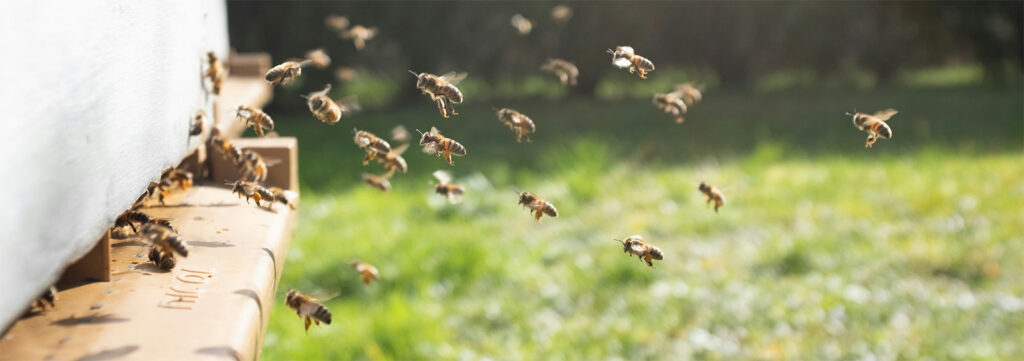
US Beekeepers Sue USDA Over Organic Honey Imports
Four honey farms have alleged the federal regulations favor imported organic honey. In order to meet NOP requirements, hives in the US must be placed within an organic zone of at least 1.8 miles in radius. Honey produced elsewhere in the world that meets Canada’s organic standards, which do not have an organic zone requirement, can be imported into the United States, due to the US-Canada equivalency arrangement. The plaintiffs say this puts US producers at a disadvantage, and USDA is failing to provide equal protection under the law.
How Much Land is Needed for Organic Honey Production?
Scientists at Cornell and Pennsylvania State Universities examined honey production in the northeast to determine how levels of pesticide residues in organically managed hives compare to imported organic honey and certified organic honey from Hawaii. They found that hives in areas with more than 56% natural and seminatural habitat may support honey production below the maximum pesticide residue limits for organic production.
Meet Whiskey
Chilly fall mornings are Whiskey’s cue to hop into action. Whiskey, Managing Director Connie Karr’s faithful pup, shares the same watchful spirit that drives our Watchdog Program.
Our Organic Specialists help you:
🐾 Anticipate regulatory and market shifts
🐾 Understand the implications for your business
🐾 Make informed decisions with confidence
You gain a strategic advisor who helps you act before challenges become problems. Learn More!

People & Events
Wendell Berry, 92, Passes On
Wendell Barry, the celebrated poet and writer, passed away at his home in Kentucky on August 31 at age 92. Recipient of a National Humanities Medal in 2010, Wendell wrote “Eating is an agricultural act.” That sentiment inspired many in the organic community and beyond to pay more attention to food and how it is produced.
Materials Matters at OMRI
- New Requirements for Microbial Fertilizers: Substrates/growth media which may be contributing plant nutrients to microbial fertilizer products now require additional review.
- Bacteriophage Enzyme Issue Defies Resolution: Despite extensive efforts to reach a conclusion about the whether or not a genetically engineered (GE) enzyme used in the manufacturing of a bacteriophage sanitizer would be allowed, the issue is now considered beyond resolution at this time. As a result, OMRI will no longer accept applications to review bacteriophage sanitizers marketed as a handling substance when manufactured using a processing aid derived from genetic engineering.
Practical Farmers of Iowa Offers Cover Crop Cost Share
With enrollment open until October 1 as long as slots are available, Practical Farmers of Iowa offers farmers in select states $15 per acre for planting fall cover crops before spring corn or soybean crops. Cover crops help farms reduce erosion, suppress weeds and improve soil health.
Get Up to Speed on the Organic System
University of Wisconsin’s Organic Collaborative offers an eight-session professional development program designed to help food industry professionals understand the system behind the USDA Organic label. “Inside Organic” starts September 24.
Where to Find Us
Organic Trade Association’s Organic Week, September 14-16, Washington, DC. Bill Wolf, John Foster, Emily Coleman-Wolf, Joe Dickson and Sylvia Tawse will attend.
Schedule a meeting with us during Organic Week.
Northeast Growing Together Conference, September 16-17, Kutztown, Pennsylvania. Bill Wolf will discuss “Think Like an Earthworm–Getting Organic Growing Again; What we did right – and what we need to do now” on September 17.
Organic Grower Summit, December 2-3, Monterey, California.
Accredited Certifiers Association Conference, January 26-28, 2027, Louisville, Kentucky
Organicology, February 16-18, Portland, Oregon.